Nobody Cries Like That: Hollywood's Breakup Scene Has Never Met a Real Relationship
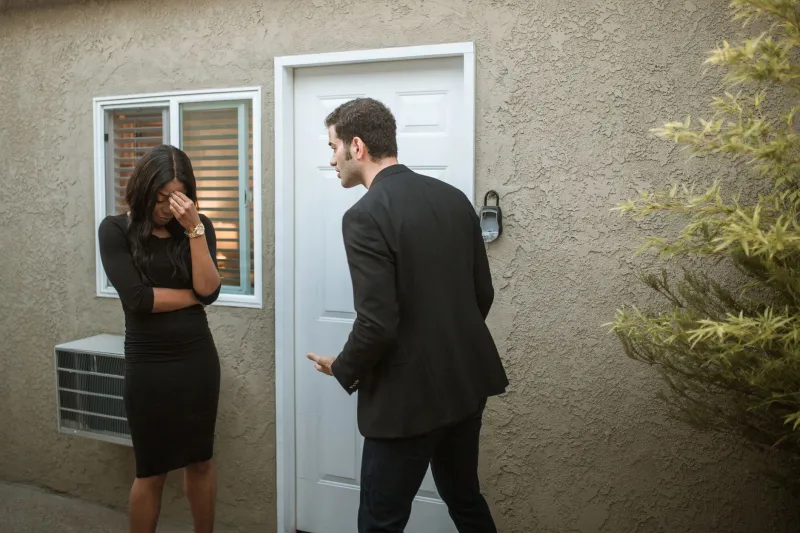
Real breakups involve bad timing, worse lighting, and at least one person saying something they'll regret for a decade. Hollywood keeps giving us something else entirely.
Let's establish the ground rules here. If you have ever actually ended a relationship — or had one ended on you, which is a different and considerably worse experience — you know that the process looks nothing like what gets put on screen. There is no golden-hour cinematography. Nobody's hair looks like that. And absolutely no one delivers a three-paragraph monologue about what the relationship meant to them while the other person listens quietly and nods with tears rolling down one cheek.
Real breakups are awkward. They're logistically complicated. Someone usually has to ask about the dog. And yet Hollywood continues to treat the romantic split as either a grand theatrical event or a tidy little narrative bow, and audiences keep walking out of theaters with a vague, nagging sense that something didn't ring true — even if they can't name exactly what.
The Two Flavors of Fake
The Hollywood breakup generally comes in two varieties, and both of them are lying to you.
The first is the operatic devastation model. This is the version where someone stands in the rain, or runs through an airport, or delivers a speech so eloquent and emotionally precise that no living human being has ever managed to produce its equivalent in an actual moment of heartbreak. Think of any prestige drama from the last thirty years. The characters articulate their pain with the clarity of someone who has had six months of therapy and a really good editor. It's beautiful. It's moving. It has almost zero relationship to how people actually communicate when they're hurt and scared and trying not to cry in a restaurant.
The second flavor is the weirdly romantic exit. This is the breakup that somehow functions as foreplay. The couple splits up, there's a charged look, the music swells, and you leave the theater half-convinced they're actually more in love than ever. The La La Land ending walks this line so deliberately it practically dares you to call it out. And yes, it works on its own terms — but it's also doing something sneaky, which is transforming a loss into something that feels suspiciously like a win.
Neither of these is how it goes.
What Actually Happens (And Why It's Hard to Film)
The real breakup is not cinematic, and that's precisely the problem. It frequently happens at inconvenient times — mid-dinner, in a car, during a holiday. It often involves someone saying the wrong thing, then trying to clarify, then making it worse. It involves silences that aren't charged with meaning; they're just two people who don't know what to say next. And it almost always ends with someone having to figure out how to get home.
None of that is easy to dramatize without losing an audience's attention. Film is a compressed medium. You have maybe three minutes to convey the end of a two-year relationship, and if you spend those three minutes in realistic, halting, circular conversation, you're going to lose people. So writers reach for the shorthand: the dramatic speech, the perfect metaphor, the single tear.
But here's the thing — some filmmakers have actually cracked it, and the results are more memorable than any rain-soaked airport sprint.
The Rare Films That Got It Right
Blue Valentine (2010) remains probably the most brutally honest depiction of a relationship's end in mainstream American cinema. Ryan Gosling and Michelle Williams don't get a clean scene. Their breakup is distributed across the entire film, bleeding into arguments and silences and small domestic failures. By the time the final confrontation arrives, it doesn't feel like a scene — it feels like an inevitability. It's uncomfortable to watch because it's familiar in a way that polished Hollywood product almost never is.
Marriage Story (2019) earned its reputation largely on the strength of one extended argument scene that escalates into something genuinely ugly. Noah Baumbach let his characters say things that people actually say when they're past the point of careful communication. The scene is famous because audiences recognized it — not because it was pretty, but because it wasn't.
Even Eternal Sunshine of the Spotless Mind (2004), for all its surreal structure, understands something true about how people process the end of love: messily, non-linearly, and with a persistent inability to fully let go.
What these films share is a willingness to make the audience uncomfortable. They don't resolve the breakup into something manageable. They let it sit.
The Comfort Problem
Here's the uncomfortable truth about why Hollywood keeps getting this wrong: audiences say they want authenticity, but they consistently reward comfort. A breakup scene that leaves you unsettled doesn't play well in test screenings. A breakup scene where both parties say exactly what they mean, part on terms that feel emotionally satisfying, and look great doing it — that one gets a thumbs up on the exit survey.
So the industry optimizes for the version that feels good rather than the version that feels real, and the cycle continues. We get breakups that are secretly reunions, splits that are actually love confessions in disguise, and endings that somehow manage to make everyone look wise and beautiful and articulate under pressure.
Which, again — nobody cries like that. Nobody talks like that. And somewhere, in every theater showing one of these scenes, there's a person in the audience thinking quietly: that's not how it went for me.
The movies that acknowledge that gap — the ones willing to film the awkward silence, the bad timing, the person who just can't find the right words — those are the ones worth watching twice. Not because they're fun, but because they're honest. And honest, in a genre that runs almost entirely on fantasy, is genuinely rare enough to be remarkable.