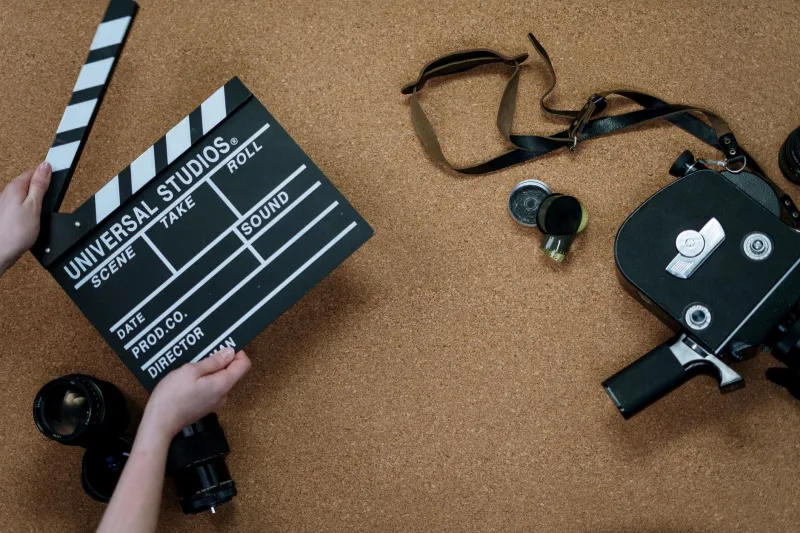
Popcorn Optional: Has the Sofa Replaced the Silver Screen for Good?
Let's be honest with ourselves for a second. The last time you watched a $200 million spectacle on your laptop — the one with the sweeping orchestral score and the CGI that reportedly took four years to render — did you feel anything? Or did you just kind of... scroll through your phone during the slow parts and call it a night?
No judgment. We've all been there.
The migration of major film releases toward simultaneous or near-simultaneous streaming debuts has been one of the most seismic shifts in entertainment history. And yet, somehow, we've collectively treated it like a minor software update. "Oh, it's on Netflix too? Cool." Meanwhile, the entire architecture of how cinema functions as a cultural event has been quietly dismantled and reassembled in your den.
The Theater Wasn't Just a Venue — It Was a Ritual
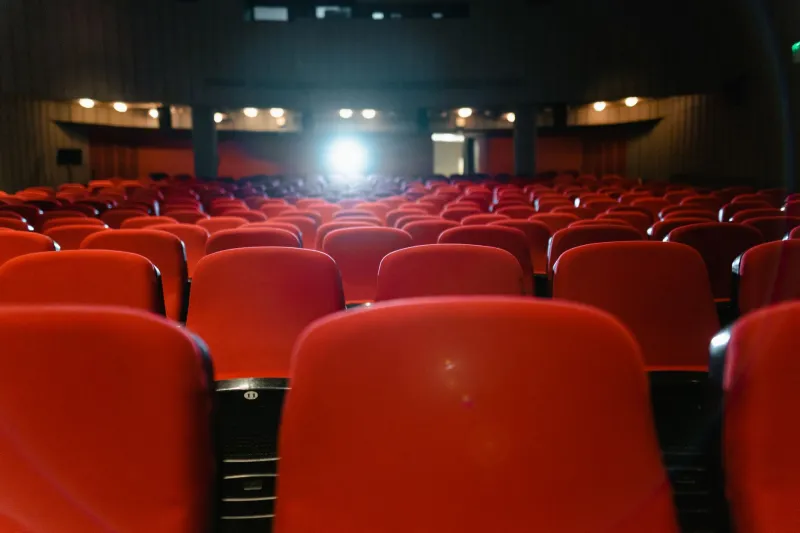
There's something almost anthropological about the moviegoing experience that streaming quietly erased. You drove somewhere. You paid an objectively absurd amount for a medium Coke. You sat in the dark with a room full of strangers and agreed, collectively, to feel things together. When the lights went down before Avengers: Endgame, the guy three seats over was vibrating at the same frequency as you. That shared anticipation? You can't manufacture that from a couch.
Cultural theorists have long argued that communal experiences shape how we process and remember stories. The theater was essentially a controlled environment for collective emotion — laughing together, gasping together, sitting in stunned silence together after something genuinely shocking happened on screen. Those shared reactions are what turned movies into moments, the kind people reference for decades.
When Jaws terrified an entire generation in 1975, it did so because audiences experienced that fear together, in real time. The story of people running out of theaters, of lines wrapping around city blocks — that's not just nostalgia. That's the proof of concept for why theatrical releases built cultural monuments that streaming premieres simply haven't replicated at the same scale.
The Streaming Debut Dilemma
Here's where it gets complicated. Streaming hasn't killed good movies. If anything, platforms like Netflix, Apple TV+, and Amazon Prime have bankrolled some genuinely ambitious, adult-oriented filmmaking that studios in the multiplex era would never have greenlit. The Power of the Dog. Tar (okay, that was theatrical, but you get the point). Films that reward patience and attention.
But there's a specific kind of movie that suffers enormously in the transition from screen to stream: the big, loud, visually audacious blockbuster. These films were engineered for a cathedral. The sound design was calibrated for a Dolby Atmos theater. The frame was composed assuming you'd be sitting sixty feet away from a screen the size of a small building. When you compress all of that onto a 55-inch TV — or worse, a tablet — you're not watching the same movie the director made. You're watching a photograph of it.
And filmmakers know this. Which raises an uncomfortable question: are some of them adjusting their ambitions accordingly?
Are Directors Quietly Scaling Down?
There's a growing suspicion among cinephiles — the kind of people who use words like "mise-en-scène" unironically — that certain streaming-first directors are making different choices because they know their audience is distracted. Shorter action sequences. More dialogue-driven scenes. Less reliance on the kind of patient, wide-frame visual storytelling that demands your undivided attention.
This isn't a conspiracy. It's basic audience psychology. If you know people are watching on devices while simultaneously ordering DoorDash, you write differently. You cut faster. You make the emotional beats more explicit because you can't trust that the atmosphere of a darkened theater is doing half the work for you.
Some directors have pushed back hard. Christopher Nolan's entire career post-Dunkirk has been a sustained argument for the theatrical experience — the man practically went to war with Warner Bros. over the Tenet release strategy. Denis Villeneuve has been equally vocal, insisting that Dune was built for IMAX and that watching it any other way is a fundamentally diminished experience. And he's right. But he's also increasingly in the minority.
The Water Cooler Is Now a Group Chat
Here's the thing streaming did preserve: the conversation. Just not the same conversation.
The old water cooler moment — "Did you see that movie this weekend?" — had urgency because everyone saw it at roughly the same time. Streaming fractured that timeline. Now people finish a film three weeks apart, at wildly different hours, in wildly different states of attention. The communal discussion still happens, but it's asynchronous. It lives in group chats and Reddit threads and comment sections rather than in real time, face to face.
That's not nothing. But it's also not the same thing as standing in a parking lot after The Dark Knight with your friends, all of you too wound up to go home yet.
So Is Movie Magic Actually Dead?
Short answer: No. Slightly longer answer: It's been relocated and repackaged, and we're still figuring out what that means.
The magic didn't vanish — it fragmented. The theatrical experience still exists and still delivers those communal highs when the movie is worthy of them (Top Gun: Maverick proved that definitively). But the streaming era created a parallel track where a different kind of magic operates: the intimacy of a great film watched alone at midnight, the ability to pause and rewind and really study a performance, the accessibility that means a kid in rural Kansas can watch an arthouse film from Romania without leaving town.
What we lost is the monoculture moment — the shared national experience of a film that everyone processed simultaneously. What we gained is volume, access, and variety.
Whether that's a fair trade depends entirely on what you loved most about movies in the first place. If it was the communal electricity of a packed house, streaming will always feel like a consolation prize. If it was the story itself, the characters, the craft — well, those survived just fine.
The popcorn, though. Nobody's cracked the at-home popcorn problem yet. And that, more than anything, is the streaming era's greatest failure.