Scroll, Stall, Repeat: The Cruel Joke Streaming Services Are Playing on Your Friday Night
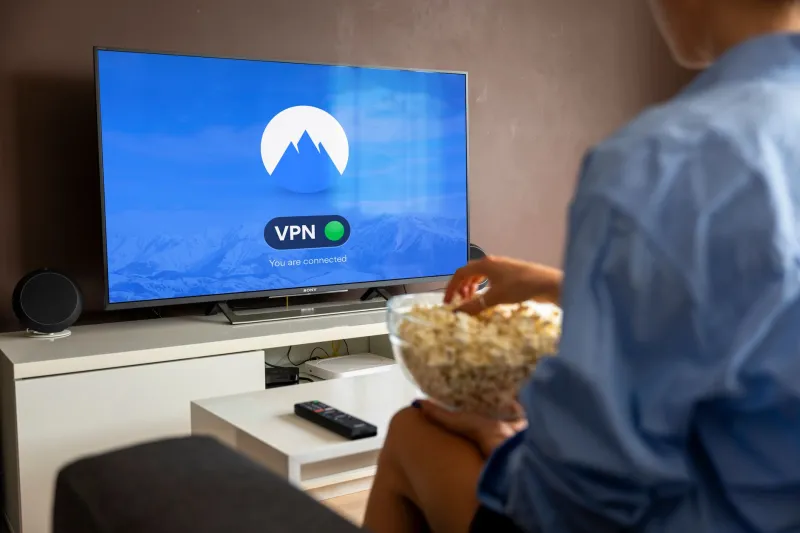
It is 8:14 PM on a Friday. You have earned this. The week was long, the couch is soft, and you have access to more film and television content than any human being in the history of civilization. By all reasonable measures, this should be the best night of your life.
Instead, you are scrolling. And scrolling. And scrolling some more — past thrillers you've been meaning to watch, past documentaries you bookmarked eight months ago, past a rom-com your coworker swore by, past something called Neon Abyss that Netflix is aggressively insisting you'll love. Forty-five minutes later, you've watched nothing. You've also somehow rewound to the same row of options you started with, as if the answer was hiding there the whole time.
Congratulations. You've been hit by one of the most absurd ironies of the modern era: the more stuff there is to watch, the less satisfying watching anything actually becomes.
Barry Schwartz Called This Years Ago (And Nobody Listened)
Back in 2004, psychologist Barry Schwartz wrote The Paradox of Choice, a book that essentially predicted your ruined Friday night two decades before it happened. His core argument was simple and a little devastating: past a certain threshold, more options don't make us happier. They make us anxious, indecisive, and weirdly resentful of the very abundance we were supposed to enjoy.
Schwartz called this "choice overload," and while he was mostly talking about salad dressings and retirement plans, the principle scales uncomfortably well to streaming. When you had three networks and a VHS collection, picking something to watch was easy because the decision space was small. Now you're navigating a content catalog so enormous that Netflix alone would take you over four years to exhaust — assuming you never slept, ate, or went outside.
The brain, it turns out, is not built for this. Faced with an overwhelming number of options, it defaults to a kind of decision-making paralysis that researchers have documented repeatedly. In one famous study, shoppers presented with 24 jam varieties were far less likely to buy anything than those shown just six options. The jam study has become almost a cliché at this point, but its implications for streaming are uncomfortably direct: more choices produce less commitment.
The Algorithm Is Not Actually Your Friend
Here's where it gets sneakier. Streaming platforms know about choice overload. They've known about it for years. And their response has not been to offer you fewer options — it's been to offer you a recommendation engine that creates the feeling of personalization while quietly serving the interests of the platform over yours.
Netflix, Disney+, Hulu, Max — they all run on systems designed to keep you engaged with the interface, not necessarily with any particular piece of content. The endless scroll, the autoplay trailers, the "Top 10 in the U.S. Today" banner — these are all tools engineered to maintain your attention on the platform while you make up your mind. The longer you browse, the more data they collect. The more data they collect, the better they understand how to keep you browsing.
It's a loop, and you're inside it, and it is extremely good at what it does.
Researchers at the University of Texas found that the anticipation of choosing — the browsing itself — activates dopamine pathways in ways that actual viewing sometimes doesn't match. You feel like you're doing something productive when you scroll. You feel like the perfect option is just one more swipe away. It almost never is, but your brain doesn't entirely know that.
Why Settling Feels Like Losing
There's another wrinkle that Schwartz identified and that streaming culture has turbocharged: the phenomenon of anticipated regret. When your options were limited, picking a movie felt low-stakes. But when you have 40,000 alternatives, every choice carries an invisible question mark: Is there something better I'm missing?
This is why you can start a perfectly good film, make it twenty minutes in, and suddenly feel vaguely dissatisfied — not because anything is wrong with the movie, but because your brain is quietly running calculations about all the other movies you could theoretically be watching instead. The opportunity cost of every choice has become psychologically enormous.
Social media has made this exponentially worse. Twitter, TikTok, and Reddit are constantly surfacing clips, takes, and discourse about films you haven't watched yet, creating a persistent background noise of cultural FOMO. If you're not watching the thing everyone's talking about right now, you're already behind. And if you're watching something that nobody's talking about, are you even watching it right?
Breaking the Loop (Without Becoming a Monk About It)
The good news is that decision paralysis is a recognized, solvable problem — and you don't need to cancel all your subscriptions and start renting DVDs from a gas station to fix it.
Psychologists who study this stuff generally recommend shrinking your decision space before you sit down to watch. Make a short list of three or four genuine candidates earlier in the day, when you're not already tired and slightly hungry. Commit to one before you open the app. Treat it like a reservation, not a buffet.
Some viewers swear by themed nights — horror Fridays, documentary Sundays — as a way to pre-filter the options and eliminate entire categories of content before the scroll begins. Others use external recommendation sources (a friend, a critic, a newsletter) specifically to outsource the decision and reduce the cognitive load.
The nuclear option, endorsed by more than a few behavioral economists, is the coin flip. Narrow it to two options, flip, and commit. The moment you feel mild disappointment at the result, you know which one you actually wanted.
The Real Cost of Infinite Content
Ultimately, the streaming era has sold us a fantasy: that unlimited access equals unlimited satisfaction. It doesn't. The math doesn't work that way, and neither do human brains.
What unlimited access actually gives you is unlimited opportunity for second-guessing, infinite room for regret, and a browsing experience so polished and frictionless that it can eat an entire evening without delivering anything resembling the movie night you were promised.
The films are still good. The content is still there. Friday night still has potential. But none of that matters much if you spend it in the scroll — perpetually one thumbnail away from a decision you never quite make.
Maybe Barry Schwartz should've written the sequel. He definitely would've had something to say about the autoplay feature.