Swipe Right on Cinema: How TikTok Broke Filmmaking and Then Accidentally Fixed It
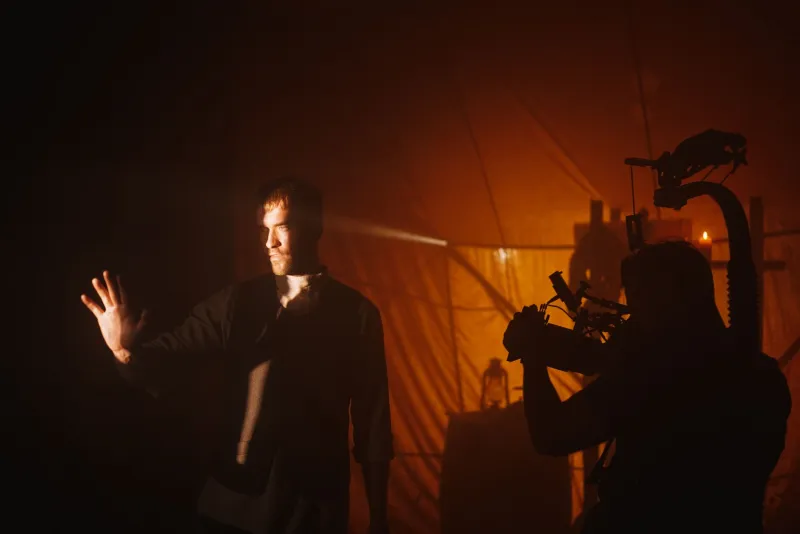
Somewhere right now, a film school student is editing their thesis short. They've got a beautifully composed establishing shot — golden hour light, a quiet street, a character walking alone. It runs about eight seconds. Their professor tells them it needs to breathe. Their brain, marinated in TikTok since 2019, screams that eight seconds is already an eternity and half the audience has already mentally swiped away.
This is the creative crisis and the creative opportunity of our current moment, all wrapped up in one anxious film student and one eight-second shot.
Short-form video didn't just change what we watch for fun. It is actively reshaping the grammar of how stories get told on screen — and the conversation about whether that's a disaster or an evolution is way more interesting than either side usually admits.
The Attention Span Panic (And Why It's Slightly Overblown)
Let's get the doom-and-gloom argument out of the way first, because it's not entirely wrong.
The average TikTok user makes a keep-or-swipe decision in roughly 1.7 seconds. One point seven. That's not enough time to read this sentence out loud. When that becomes the baseline expectation for engagement, it creates real pressure upstream — on editors, directors, studios, and distributors who all know that audiences trained on short-form content have recalibrated their tolerance for slow storytelling.
You can see the fingerprints of this everywhere in mainstream cinema. Marvel films — particularly the post-Endgame output — have been widely criticized for editing patterns that feel almost anxious, cutting away before a scene has time to settle, stacking quips on top of each other to fill any silence that might feel like dead air. Action sequences that would've been given room to develop in a 1990s blockbuster now feel like they've been assembled by someone who's terrified of a single dull frame.
"There's a real fear in certain studio productions of the audience getting bored," said one editor who works primarily in the studio system and spoke candidly on the condition of anonymity. "And sometimes that fear produces good, propulsive filmmaking. And sometimes it produces chaos."
The chaos part is real. When every scene is edited like a highlight reel, you lose the valleys that make the peaks feel earned.
But Here's the Thing: Short Doesn't Mean Shallow
Okay, now the counterargument, and this is the part that tends to get lost in the generational hand-wringing.
TikTok, Instagram Reels, and YouTube Shorts have also produced an absolutely staggering amount of genuinely inventive visual storytelling. The constraint of fifteen to sixty seconds forces a kind of ruthless economy of storytelling that is, in its own way, a masterclass in the basics. Every frame has to work. Every edit has to mean something. You cannot coast.
Some of the most formally interesting filmmaking happening right now is being done by creators who started on short-form platforms and developed a visual instinct that's genuinely distinct from traditional film school training. They understand rhythm differently. They understand the hook differently. And increasingly, they're moving into longer formats and bringing those instincts with them — sometimes brilliantly.
Directors like Janicza Bravo, who made Zola, demonstrated that you can take the fragmented, punchy energy of internet-native storytelling and build something with actual depth and weight out of it. The film feels like it was assembled from tweets and yet lands emotionally in ways that plenty of more "serious" films don't.
The Slow Cinema Backlash (Which Is Also Real and Also Valid)
Here's where it gets genuinely interesting, because the TikTok effect has produced not one but two opposing creative responses.
Response one: faster, punchier, more kinetic mainstream filmmaking, as described above.
Response two — and this is the one film critics are losing their minds over in the best possible way — a counter-movement of deliberately, almost aggressively slow cinema.
Filmmakers like Kelly Reichardt, Chloe Zhao (at her indie best), and a wave of international directors are doubling down on long takes, meditative pacing, and the kind of silence that demands something of an audience. It's as if the existence of TikTok has clarified, for certain filmmakers, exactly what film can do that no short-form platform ever will: it can hold you still long enough to feel something complicated.
The argument these filmmakers are making — whether consciously or not — is that patience is itself a cinematic value. That the willingness to sit with a character for three unbroken minutes is an act of intimacy that fifteen seconds can never replicate.
And audiences are showing up for it. Past Lives, Aftersun, All of Us Strangers — these are slow, quiet, emotionally demanding films that found real audiences in a supposedly distracted era. Which suggests that the death of the attention span has been, at minimum, exaggerated.
Gen Z Is Not the Problem (And Not the Solution Either)
It's tempting to make this a generational story — TikTok brain versus cinephile brain, Gen Z versus everyone who saw 2001: A Space Odyssey in a theater. But that framing is lazy and it's wrong.
Gen Z audiences are watching Dune. They're going to see Oppenheimer at midnight screenings. They're posting three-minute video essays about obscure Criterion releases on the same platform that hosts fifteen-second dance trends. The idea that short-form content has rendered young audiences incapable of sustained engagement with complex cinema is not supported by what young audiences are actually doing.
What has changed is the competition for attention. Every filmmaker, regardless of audience age, is now competing not just with other films but with an infinite scroll of content that is specifically engineered to be maximally stimulating at minimal length. That's a real challenge. It just doesn't require panicking.
So Where Does This Leave Cinema?
Honestly? In a pretty fascinating place.
The pressure that short-form video puts on filmmakers is, at its best, clarifying. It's forcing a reckoning with what cinema actually does that nothing else can — what it offers that a TikTok never will. And the filmmakers who are answering that question clearly and confidently are making some of the most compelling work in years.
The ones who are just trying to edit their way into TikTok-speed relevance are, more often than not, making things that feel like neither good TikToks nor good films.
The swipe economy changed the game. But the game — the real one, the one where a story unfolds in the dark and something shifts inside you — that game is still very much being played. You just have to be willing to put the phone down long enough to let it happen.