You Almost Quit It Twenty Minutes In — And Now It's Your Favorite Movie Ever
Let's be honest about something. There is a very specific kind of movie conversation that happens in this country approximately ten thousand times a day, and it goes something like this: "Oh, you have to watch it. It's incredible. Just — okay, the first thirty minutes are a little slow, but once it gets going it absolutely wrecks you."
And somewhere, a person nods along, adds it to their watchlist, opens it on a Tuesday night, watches a guy stare out a window for six uninterrupted minutes, and then puts on The Office instead.
We have a problem. Or maybe the movies have a problem. Or — and this is the uncomfortable possibility nobody really wants to sit with — maybe we've collectively trained ourselves to have the cinematic patience of a golden retriever watching someone eat a sandwich.
The Slow-Burn Defense League
Every generation has its version of the slow-burn movie. The kind of film that gets described in hushed, reverent tones by the people who made it to the end. Think There Will Be Blood, Annihilation, Hereditary, The Zone of Interest, Oppenheimer in its quieter stretches — films that demand something from you before they deliver anything back.
The defenders of these movies are passionate, almost aggressively so, and they will absolutely corner you at a party to explain why the two-hour setup is actually the whole point. And here's the thing: they're often right. Some of the most rewarding cinematic experiences require a kind of slow-cooking patience that the final product absolutely justifies.
But here's what those same defenders will quietly admit if you get them talking long enough — they almost bailed. Most of them did bail, at some point, and came back to it later. A fair number of them fell asleep the first time and only made it through on the second attempt because someone told them to stick with it.
Which raises an obvious question: if a movie's reputation depends on people being warned in advance to not give up on it, is that good storytelling or is it just hazing?
What Streaming Did to Our Brains
Before you blame the movies entirely, let's talk about the environment we're watching them in. The streaming era didn't just change where we watch films — it fundamentally rewired how we watch them.
When you're sitting in a movie theater, you are physically committed. You drove somewhere. You paid for parking (which, in most American cities, is basically a second mortgage). You bought a $17 bucket of popcorn. You are in. The sunk cost alone keeps you in your seat through the slow parts.
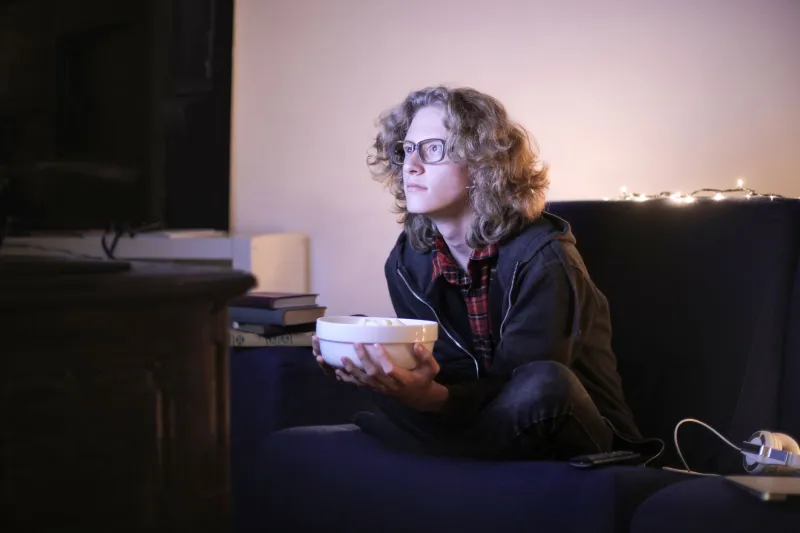
But on your couch? With your phone six inches from your hand? With seventeen other shows one click away? With the ability to pause, check Twitter, make a snack, come back, lose the thread, get bored, and then just... put on something you've already seen? That's a completely different psychological contract with a piece of art.
Netflix reportedly has data suggesting that most viewers decide whether to keep watching a show or movie within the first few minutes. A few minutes. We are essentially making life-or-death decisions about two-hour films before the first act has even introduced all its characters.
Directors who spent three years making something are now competing with the gravitational pull of your refrigerator.
The Pacing Problem Is Real, Though
Here's where it gets complicated, because it would be very easy to just blame streaming culture and call it a day. But some slow-burn films are genuinely, objectively poorly paced — and the cult around them has made it unfashionable to say so out loud.
There is a difference between a movie that earns its slowness and a movie that mistakes slowness for depth. Lingering on a landscape for thirty seconds can be gorgeous, evocative, essential to the emotional texture of a story. Lingering on a landscape for four minutes while nothing develops is just... a screensaver.
Not every deliberately paced film is a masterpiece in disguise. Some of them are just slow. And the problem is that the discourse around slow-burn cinema has become so protective — so convinced that anyone who doesn't love it simply lacks the intellectual stamina — that legitimate criticism gets buried under a pile of "you just didn't get it."
You're allowed to think a movie was too slow. That's a valid response to a piece of art. It doesn't mean you're broken. It might just mean the movie didn't work.
The Real Question Nobody Asks
Here's the thing that the slow-burn debate almost always skips over: at what point in a movie are you allowed to give up on it?
There's an old Roger Ebert-adjacent rule that floats around film circles — give a movie about ten minutes per decade of your life before you're allowed to walk out. By that math, most American adults owe a film somewhere between 40 and 60 minutes before passing judgment. That sounds reasonable until you're 45 minutes into something that still hasn't introduced a single element you care about.
The honest answer is that there's no universal rule, and anyone who tells you otherwise is selling something. Some movies front-load their worst material. Some movies are best understood only in retrospect, where the "boring" first act reveals itself as essential scaffolding. And some movies are just not for you, regardless of how many people put them on their top ten lists.
The slow-burn paradox is this: the movies that most reward patience are also the ones most likely to be abandoned before they get the chance to prove it. And streaming culture, with its infinite alternatives and zero commitment, has made that abandonment easier than ever.
So Who Wins?
Neither side of this argument gets to be completely right, which is probably the most annoying possible conclusion.
Filmmakers who deliberately pace their work for maximum emotional payoff aren't wrong to do so. Some of the greatest movies ever made ask you to show up and slow down, and the experience of finally surrendering to that rhythm is genuinely one of the better things cinema can offer.
But audiences who struggle to get there aren't simply culturally deficient. The world they're watching movies in has changed dramatically, and pretending that the context of consumption doesn't affect the experience is its own kind of intellectual dishonesty.
Maybe the real move is this: if someone tells you a movie is a slow burn, watch it in a theater. Or at least put your phone in another room. Give it the conditions it was designed for.
And if you still bail twenty minutes in, that's okay too. There are a lot of great movies out there that will grab you immediately and never let go.
They just probably won't be anyone's favorite film of the decade.