You Swore You'd See It. You Didn't. Neither Did Anyone Else.
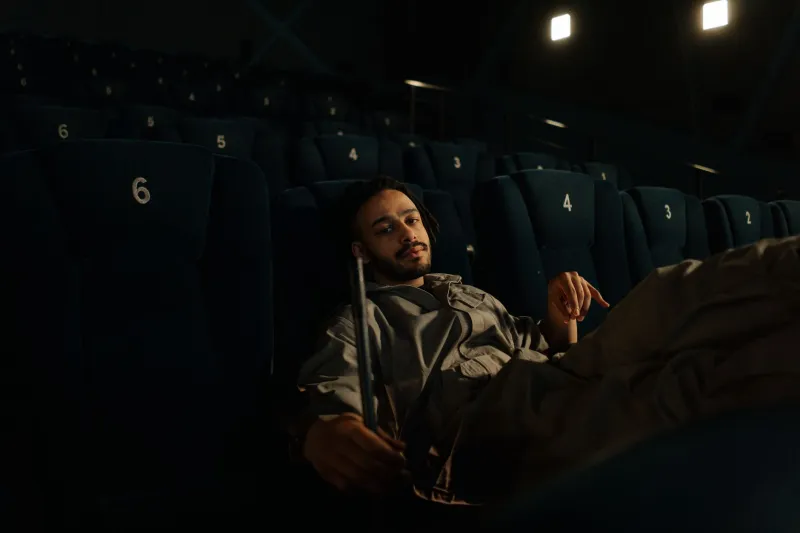
Somewhere right now, there is a thoughtful, beautifully crafted film — probably subtitled, possibly in black and white, almost certainly the subject of a glowing A24 press release — sitting in a theater near you with seventeen people in it. Twelve of those people are critics. Four are the director's relatives. One is genuinely lost and waiting for the Transformers sequel.
Meanwhile, you are at home. Watching Elf in March.
This is not an accusation. This is a diagnosis. And you are not alone.
The Intention Economy (Where Good Films Go to Die)
Let's call it the Watchlist Illusion. Every time a trailer drops for something that feels important — a slow-burn thriller about grief, a foreign-language drama about generational trauma, a documentary that will "change the way you think about [insert systemic issue]" — something lights up in our brains. We feel virtuous just by acknowledging the film's existence. We tell our coworkers about it. We share the trailer. We set a mental reminder that lasts approximately until the next time Netflix autoplays something familiar.
Box office analysts have quietly been wrestling with this gap for years. Pre-release tracking data — the surveys studios use to estimate opening weekends — routinely shows massive "definite interest" numbers for prestige films. The kind of movies that win Palme d'Or awards or land on every critic's top-ten list generate enormous buzz and stated intent. Then they open. And the numbers are... fine. Quietly, awkwardly fine. Like a dinner party where everyone RSVPed yes and half the guests bailed with a last-minute "something came up."
Compare that to a mid-budget action sequel that nobody was particularly excited about. Tracking shows moderate interest. Critics are lukewarm. And yet, opening weekend? Packed. Because that audience actually showed up.
The Comfort Rewatch Is Winning
Here is the uncomfortable truth about modern viewing behavior: we are not as adventurous as we think we are. Streaming data — the little that platforms actually make public — suggests that a significant chunk of total viewing hours goes toward content people have already seen. Not new discoveries. Not the acclaimed limited series everyone's been recommending. Old favorites. Comfort food. The cinematic equivalent of ordering the same thing at a restaurant because you know it's good.
Netflix, Hulu, and their competitors have quietly built their recommendation engines around this reality. They know that a subscriber who feels vaguely overwhelmed will default to familiarity. They've built entire content strategies around that behavioral truth. You think you're choosing Schindler's List for the first time. The algorithm thinks you're choosing The Office for the eleventh.
And honestly? The algorithm is usually right.
Why We Lie to Ourselves (and to the Box Office)
Psychologists have a term for this: the intention-behavior gap. It's the distance between what we plan to do and what we actually do, and it shows up everywhere from gym memberships to voting to, yes, watching that Oscar-nominated film about the immigrant experience that everyone agreed was essential viewing.
The gap exists for a few reasons, and none of them make us look great.
Effort asymmetry. Engaging with a genuinely complex film requires something from you. Attention. Emotional availability. Possibly subtitles. After a full workday, the cognitive overhead of actually watching something challenging is a bigger ask than it sounds. Rewatching Interstellar — where you already know the twist — is a passive experience. Watching something new that might break your heart or confuse you or demand your full focus? That's a commitment.
Social signaling without follow-through. Saying you're going to see a critically acclaimed film carries social currency. Actually seeing it carries risk — what if you don't connect with it? What if you find it boring and have to admit that to someone? Better to keep it in the "planning to see" category indefinitely, where it remains theoretically impressive.
Marketing that overshoots its audience. Studios and distributors spend heavily on prestige campaigns — the For Your Consideration ads, the film festival circuit, the NPR interviews. But that marketing is often better at creating awareness than it is at converting awareness into ticket sales. You can make millions of people feel like they should see a movie without making them actually want to.
The Opening Weekend Problem
This dynamic creates a specific kind of chaos for distributors. A film can generate enormous early buzz, strong critical reviews, and respectable pre-release tracking — and then open to a disappointingly thin crowd. The movies that perform tend to be the ones with the clearest, most frictionless pitch. Big action. Known IP. A trailer that tells you exactly what you're getting.
Prestige films, by contrast, often rely on audiences doing a little work. They require you to trust a filmmaker, engage with an unfamiliar premise, or sit with ambiguity. And while those qualities make for great cinema, they are not exactly optimized for a society that has been trained by algorithms to expect immediate satisfaction.
The cruel irony is that the films most deserving of a wide audience are often the ones least equipped to demand one.
So Who's Actually Watching?
Here's where it gets interesting. The films that do find their audiences — the ones that turn modest box office runs into genuine cultural moments — almost always do it slowly. Word of mouth. A streaming platform picks it up. A viral moment. Someone makes a TikTok. Your coworker won't stop talking about it.
Everything Everywhere All at Once is the textbook example. It didn't conquer its opening weekend. It built. It grew. It became the kind of movie that people actually watched because someone they trusted wouldn't shut up about it. That's a different kind of marketing than a studio campaign. It's slower, messier, and harder to manufacture — but it's also the only thing that seems to reliably close the gap between intention and action.
The Verdict (On You, Specifically)
Look. We're not here to judge. Kakkee Movie is a judgment-free zone — mostly. But the data is pretty clear that the version of yourself who watches challenging, rewarding, boundary-pushing cinema exists primarily in your head, while the actual you is three episodes deep into a show you've already finished twice.
The good news? That gap is closable. The next time you tell yourself you'll see something, maybe just... see it. Buy the ticket. Press play before you can talk yourself into rewatching Anchorman again.
The movies that deserve your attention are out there, sitting in half-empty theaters, waiting patiently.
They're used to it by now.