Rooting for the Wrong Guy: How Hollywood's Villains Became the Most Interesting People in the Room
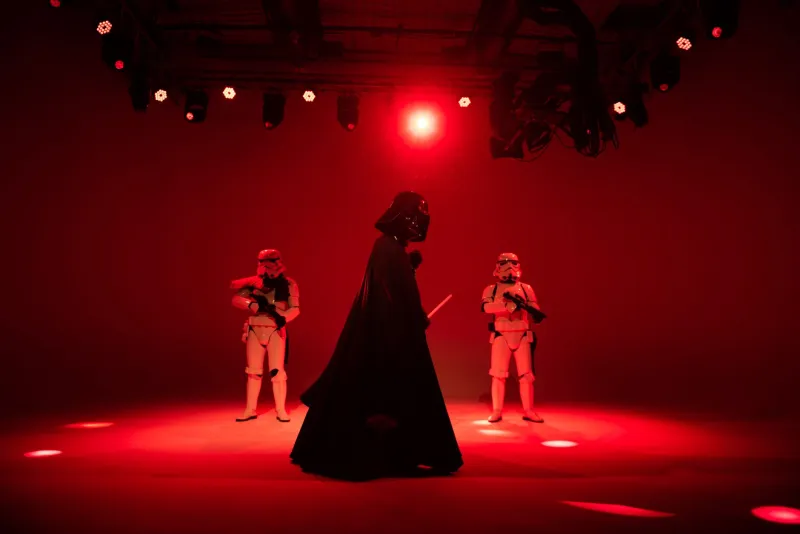
Let's be honest with ourselves for a second. The last time you watched a superhero movie, a prestige thriller, or even a big dumb blockbuster, there's a decent chance you spent half the runtime secretly hoping the villain would pull it off. Not because you're a bad person. Not because you want to watch the world burn. But because the villain had a plan, a wardrobe, and something resembling an actual personality — while the hero was busy staring into the middle distance and delivering lines that sounded like they were auto-generated from a "motivation speech" template.
This is the villain problem. Except, increasingly, it doesn't feel like a problem for the villains at all.
From Mustache-Twirling to Scene-Stealing
For most of Hollywood's history, the bad guy's job was simple: be evil, be loud, lose in the third act. Think of the cartoonish henchmen of '80s action movies, the sneering corporate overlords of '90s thrillers, or the generic world-domination types that populated every other summer blockbuster. They existed to make the hero look good by comparison. The dramatic equivalent of a slow pitch.
But somewhere in the mid-2000s, something shifted. Writers — whether out of genuine creative ambition or sheer exhaustion with the formula — started pouring the good stuff into the antagonists. The nuance. The backstory. The charisma. The jokes. Suddenly, villains weren't just obstacles. They were the most interesting characters in the building.
Take the MCU's Thanos. Love him or hate the purple CGI, the guy had a coherent worldview, an emotional arc, and a motivation that — if you squint and ignore the whole genocide part — almost made a twisted kind of sense. Meanwhile, the heroes were largely reacting to him. He drove the plot. He set the terms. He gave the movie its moral weight. And audiences responded by making him one of the most talked-about characters in modern blockbuster history.
Or look at No Country for Old Men. Anton Chigurh isn't just terrifying — he's philosophical. He has a code. He's more consistent than half the protagonists in Hollywood's recent output. You can set your watch to his nihilism. Sheriff Bell, the nominal hero, is compelling in his own right, but audiences walked out of that film talking about Chigurh. They still are.
The Sympathy Trap
Here's where it gets really interesting — and a little uncomfortable. Modern cinema hasn't just made villains more charismatic. It's made them relatable. And that's a different beast entirely.
Consider Killmonger in Black Panther. The film does something genuinely bold: it gives the antagonist a grievance that the audience can't entirely dismiss. His methods are monstrous, sure. But his anger? His frustration with systemic inequality and abandonment? That lands. The movie essentially asks you to hold two things at once — this person is wrong, and this person is not entirely wrong — and that tension is more dramatically interesting than anything the straightforwardly heroic T'Challa is dealing with in the same runtime.
Or swing over to prestige TV territory, where this trend has practically become law. Walter White. Roy Batty. Amy Dunne in Gone Girl. Hannibal Lecter. These aren't just antagonists — they're cultural touchstones. Characters who became iconic precisely because audiences found themselves inexplicably invested in their success, at least for a moment, despite knowing better.
The sympathy trap is real, and Hollywood has learned to exploit it ruthlessly. Give a villain a dead parent, a broken system that failed them, or a single moment of genuine tenderness, and suddenly the audience is doing emotional gymnastics trying to reconcile their feelings. It's good storytelling. It's also, occasionally, a cheat code for avoiding the harder work of writing a compelling hero.
So What's Actually Wrong With the Heroes?
This is the part where we have to say it plainly: a lot of modern protagonists are boring. Not all of them. Not even most of them. But enough that the trend is noticeable and worth calling out.
The issue isn't that heroes have to be morally perfect — audiences have never actually wanted that. The issue is that too many contemporary protagonists are defined entirely by what they're against rather than who they are. They react. They suffer. They eventually triumph. But their inner lives are thin, their quirks are surface-level, and their defining characteristic is often just "determined" with a side of "haunted past."
Compare that to a well-written villain, who by narrative necessity has to have a perspective. A villain without a point of view is just a weather event. So writers are forced to construct a logic, a history, a set of beliefs — all the things that make characters feel like actual humans rather than plot functions. The irony is that this construction process is exactly what heroes need too, and it's exactly what they're too often denied.
There are exceptions, and they're worth celebrating. Paul Atreides in Dune carries genuine moral complexity. Everything Everywhere All at Once gave us a protagonist whose interiority was the entire point of the film. Pedro Pascal's Joel in The Last of Us adaptation is one of the most fully realized protagonists in recent memory. These characters work because someone cared enough to build them from the inside out, not just from the outside in.
Is This Actually a Problem, Though?
Here's the contrarian take: maybe this villain renaissance is just good storytelling evolving in real time. Maybe audiences have gotten sophisticated enough to demand moral ambiguity across the board, and the villain boom is simply the first place writers felt safe experimenting. If that experimentation eventually bleeds back into how protagonists are written — and there are signs it already is — then we come out ahead.
There's also an argument that the hero/villain binary itself is the real problem. The most compelling modern films don't really have traditional villains at all. The antagonist in Marriage Story is circumstance and ego. In Parasite, the class system is the monster. In Hereditary, it's grief and something far worse. When the conflict is systemic or internal rather than embodied in a single charismatic bad guy, everyone in the film has to carry dramatic weight. And they usually do.
But for every Parasite, there are fifteen films where the villain walks away with the movie and leaves the hero holding an empty bag.
The Takeaway
The villain problem isn't really a villain problem. It's a hero problem. Hollywood has cracked the code on writing antagonists who feel like full human beings — complex, driven, occasionally right about at least one thing — and now the challenge is applying that same rigor to the people we're actually supposed to root for.
Because here's the thing: we want to root for the hero. We show up hoping to. But if the villain is the only one in the room with a personality, a plan, and something genuinely at stake, we're going to end up cheering for the wrong person.
And honestly? At this point, the wrong person is putting on a much better show.