Stuck on Repeat: The Quiet Psychological Reason You Keep Watching the Same Five Movies
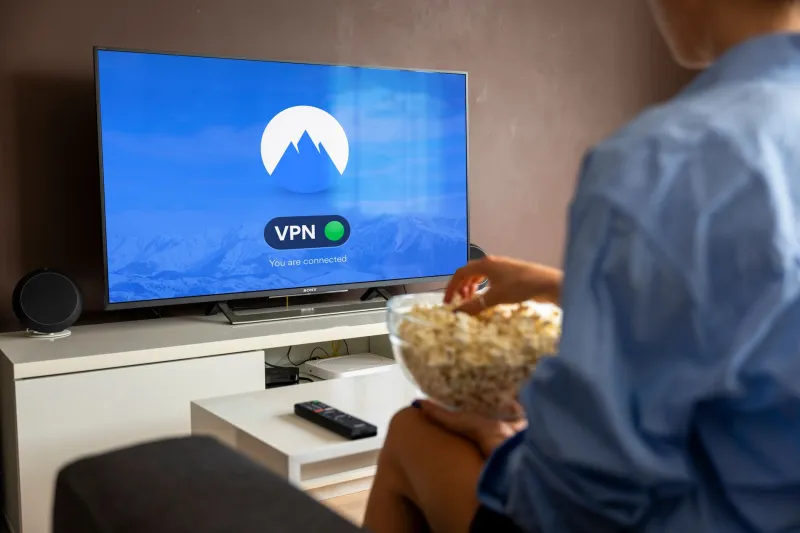
Let's paint a picture you probably recognize. It's a Tuesday night. You've had a day that felt like three days stapled together. You open your streaming app of choice, scroll past the aggressively curated rows of "New Releases" and "Because You Watched..." suggestions, hover over something ambitious and foreign and subtitled — and then you close that, back out, and put on Jurassic Park again.
Nobody told you to do that. No algorithm forced your hand. And yet there you were, mouthing the "clever girl" line before it even happened.
This is the Comfort Rewatch Economy, and it is absolutely booming.
What We Talk About When We Talk About Rewatching
First, let's be clear: there's nothing shameful about rewatching movies. Film criticism has long acknowledged that great movies reveal new layers on repeat viewings. Kubrick fans have built entire careers on this premise. Cinephiles rewatch 2001: A Space Odyssey not because they forgot the ending but because each viewing feels like a different conversation.
But that's not what most of us are doing at 9:30 on a Wednesday.
What's happening in living rooms across America right now is something more reflexive, more automatic — and arguably more telling about the current cultural moment than any box office trend or streaming metric. People aren't rewatching films to discover hidden depth. They're rewatching them because the alternative — choosing something new — requires energy they simply do not have.
Decision fatigue is a real, documented psychological phenomenon, and streaming platforms have turbocharged it to a spectacular degree. When you sit down in front of a Netflix library containing thousands of titles, your brain doesn't see infinite possibility. It sees infinite obligation. The math is paralyzingly simple: more options equals more chances to pick wrong, and picking wrong means you've wasted the one hour of downtime you managed to carve out of your day.
So you pick Bridesmaids instead. Again. Because you know Bridesmaids won't let you down.
The Anxiety Blanket Theory of Film
Psychologists have a term for what familiar media provides during stressful periods: "psychological safety." Essentially, your brain treats a well-loved movie like a weighted blanket — not because it's intellectually stimulating, but because it's known. The narrative arc, the jokes, the emotional beats — you've already processed all of it. There are no surprises. And right now, in a world that seems to specialize in unpleasant surprises, that's worth more than you might expect.
This isn't a new human impulse. People have always gravitated toward the familiar during uncertain times — the same comfort foods, the same songs, the same routines. What's new is the scale and the infrastructure that now supports it. Streaming platforms have made rewatching frictionless in a way that renting a VHS tape never was. The movie is always there, always ready, never judging you for watching The Princess Bride for the twenty-second time.
And here's where it gets a little uncomfortable: the platforms know this, and they're not exactly fighting it.
The Algorithm Is Not Your Film Professor
Here's a thing streaming services will never say in a press release: a rewatch is nearly as valuable to them as a first watch. You're still on the platform. You're still not canceling your subscription. You're still a body counted in their engagement metrics.
The recommendation algorithm, for all its sophistication, is fundamentally a machine that rewards patterns. If you watch The Office three times a week — and statistically, someone reading this absolutely does — the algorithm learns that you like The Office. It doesn't nudge you toward Atlanta or Fleabag or some brilliant limited series from a country you've never visited. It shows you more things adjacent to The Office, tightening the loop around your existing tastes until your watchlist starts looking less like a menu and more like a mirror.
The result is a generation of viewers who are, without quite realizing it, being trained to stop taking creative risks with their entertainment. Discovery requires tolerance for disappointment. The algorithm has quietly made disappointment feel optional — and so we've opted out of it.
What Your Top 5 Actually Says About You
There's a game people play on social media where you list the five movies that define you. But if you were being brutally honest, your real Top 5 isn't the prestige list you'd post publicly. It's the five films you've actually rewatched most — and those two lists are almost certainly not the same.
Your public list has Schindler's List and Moonlight on it. Your real list has Step Brothers and Clueless and whatever action movie you first watched at a sleepover in seventh grade and have never fully emotionally left.
And honestly? That second list is the more interesting document. It tells you what you reach for when your defenses are down, when you're not performing taste for anyone, when you just need the cinematic equivalent of a hug. There's genuine value in understanding that about yourself — not to fix it, but to recognize it.
The question worth sitting with is whether the gap between those two lists is growing. Whether the movies you mean to watch are piling up while the movies you actually watch stay exactly the same. Because if that gap keeps widening, you might look up one day and realize you haven't watched anything genuinely new in six months — and that the streaming revolution, which promised you the entire history of cinema at your fingertips, mostly delivered you a very expensive way to watch Elf every December.
The Case for Making It Weird Again
None of this is an argument against the comfort rewatch. Life is hard. Paddington 2 is genuinely one of the best films ever made and you are allowed to watch it whenever you want, no justification required.
But there's something worth protecting in the experience of watching a movie you know nothing about and letting it do whatever it wants to you. The laughter that catches you off guard. The ending you didn't see coming. The quiet realization that a story made somewhere you've never been is somehow about something you've felt your whole life.
That experience doesn't happen inside your comfort zone. It happens at the edge of it — in the slightly risky click on a title you've never heard of, from a director whose name you can't pronounce, in a genre you're pretty sure you don't like.
The Comfort Rewatch Economy is real, and it's understandable, and it is also — gently, kindly — eating your sense of cinematic adventure one familiar ending at a time.
Maybe tonight's the night you watch something new.
Or maybe you watch Jurassic Park again. We're not your parents. But the clever girl line hits different when it still surprises you.