Wait, Did That Character Just Explain Themselves to Nobody in Particular?
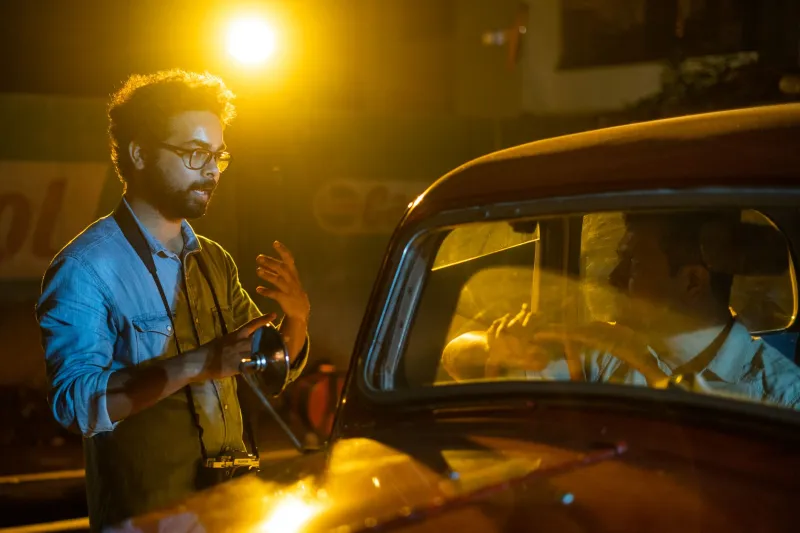
Modern movie characters have developed a strange new habit: saying exactly what they mean, exactly when the plot needs them to, in complete grammatically correct sentences. It's efficient. It's also killing the movies.
There's a specific kind of moment that has become almost universal in contemporary Hollywood releases. A character turns to another character — or sometimes, disturbingly, to no one in particular — and explains what is happening, why it is happening, and how they feel about the fact that it is happening. The explanation is clear. It is thorough. It contains no ambiguity, no subtext, and no trace of the messy, incomplete way actual human beings communicate with each other.
You've heard this dialogue. You've probably sat in a theater and felt something dim slightly inside you as it played out, without being entirely sure why. The words made sense. The information was conveyed. And yet something was missing — something that used to be the whole point.
What Dialogue Actually Does (When It's Working)
Before diagnosing the problem, it helps to remember what good screen dialogue is supposed to accomplish. And here's the thing — it's not primarily about conveying information. That's what a Wikipedia summary is for.
Dialogue, at its best, reveals character through contradiction. People say one thing and mean another. They talk around what they're actually feeling. They interrupt themselves, change the subject, make jokes at inappropriate moments, and occasionally say something so precisely wrong for the situation that it tells you everything about who they are. The space between what a character says and what they actually mean — that gap — is where most of the interesting work happens.
Think about the way characters talk in Chinatown, or The Big Lebowski, or almost anything written by Aaron Sorkin at his peak, or a Nora Ephron script, or — going further back — Billy Wilder's work. The dialogue is doing three or four things simultaneously. It's moving the plot, yes, but it's also sketching relationships, establishing power dynamics, and occasionally hiding the most important thing being communicated somewhere underneath the surface where you have to work a little to find it.
Now compare that to the average blockbuster from the last five years. The characters explain their motivations out loud. They announce their emotional states. The villain delivers a thesis statement about their worldview. The hero responds with a thesis statement about theirs. Information is transferred. Feelings are declared. And then everyone moves on to the next plot point.
The Efficiency Trap
So how did we get here? There are a few competing theories, and honestly, all of them are probably partially right.
The most generous explanation is structural. Modern franchise filmmaking requires that a film function as one installment in a much larger story, which means it has to accomplish an enormous amount of setup and exposition that standalone films simply didn't need. When you're introducing three new characters, establishing two ongoing plotlines, and setting up a sequel while also telling a coherent story in two hours, you don't have a lot of room for subtext. You need your characters to say what they mean so the audience can track what's happening.
The less generous explanation involves the increasing role of algorithm-driven development in Hollywood. When studios are using audience data to determine which story beats test well, you end up optimizing for clarity at the expense of complexity. Ambiguous dialogue doesn't score well when you're running it past test audiences who want to know exactly what's going on at all times. So the ambiguity gets cut, and what remains is dialogue that functions primarily as labeled plot delivery.
And then there's the theory that's been circulating in screenwriting circles for a few years now: that as more content gets consumed on second screens, with people half-watching while scrolling their phones, studios have started writing dialogue that works as audio even when you're not looking at the picture. Which is, to put it gently, not what movies are for.
The Ghost of Subtext Past
It's worth spending a moment with some specific examples, because the contrast is genuinely startling once you start paying attention.
In Casablanca (1942), Rick Blaine never once explains why he left Paris or what Ilsa means to him. The entire emotional architecture of the film is built on what he doesn't say, and Humphrey Bogart's performance fills in everything the script deliberately withholds. The audience does interpretive work, and the film rewards that work by feeling inexhaustible — you can watch it twenty times and still find something new.
In When Harry Met Sally (1989), the famous final speech works precisely because Harry has spent the entire film being inarticulate about his feelings. When he finally finds the words, it lands because we've watched him fail to find them for ninety minutes. The emotion is earned through contrast.
Now try to think of a recent studio release where the emotional payoff was constructed that way. Where the character's inability to say the thing was itself the story. It's not impossible — Past Lives (2023) does this beautifully, and it's not a coincidence that it came from an independent writer-director working outside the franchise system. But in mainstream studio product, the technique has become almost extinct.
Does AI Have Anything to Answer For?
The question of AI writing assistance in Hollywood is still murky — studios are not exactly volunteering information about what tools their writers are using or how much AI-generated material ends up in produced scripts. But it's worth noting that AI language models are, almost by definition, optimized for clarity and coherence. They produce text that makes sense, that follows logical patterns, that conveys information efficiently.
What they do not naturally produce is the kind of human conversational mess that makes great dialogue great. The non sequitur that reveals a character's anxiety. The overly long explanation that tells you someone is lying. The joke deployed at exactly the wrong moment because the person making it doesn't know how to handle what they're feeling.
Whether AI is directly responsible for the stilted quality of modern movie dialogue or whether it's just one more factor pushing in the same direction is genuinely hard to say. But the direction is clear: toward efficiency, away from texture. Toward information delivery, away from human mess.
And the movies are flatter for it. Not unwatchable — often still entertaining, often still technically impressive. But somehow less alive than they used to be, in a way that's hard to pinpoint until you go back and watch something from thirty years ago and hear characters talking to each other like they actually have interior lives.
That sound — the sound of people not quite saying what they mean — is what's been lost. And until someone in a position of authority decides to prioritize it again, we're going to keep getting characters who explain themselves to nobody in particular, right on schedule, right when the plot requires it.