You Already Know How It Ends — So Why Did You Buy a Ticket Anyway?
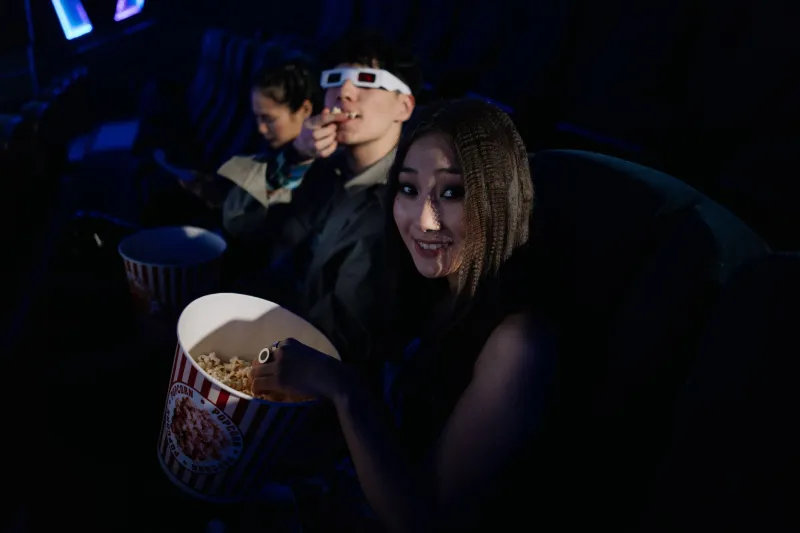
Let's just say the quiet part out loud: you sat down in that theater, popcorn in hand, watched a movie you had essentially already seen in a previous decade, and you had a pretty good time. Maybe even a great time. And then you went home and told someone it was "fine, but the original was better" — which, of course, didn't stop you from going.
Welcome to the remake paradox, population: all of us.
Hollywood has been recycling familiar properties for as long as Hollywood has existed, but something shifted in the past five years that turned the remake from a punchline into a genuine commercial strategy. The question isn't just why studios keep doing it. The more interesting question is why audiences — smart, culturally aware, chronically online audiences — keep rewarding them for it.
The Numbers Don't Lie (Even When We Wish They Would)
Here's where it gets uncomfortable. When you stack remake and reboot performance against original IP at the domestic box office, the results are not flattering to those of us who consider ourselves discerning film fans.
The 2019 live-action The Lion King crossed $1.6 billion worldwide. Aladdin the same year hit over $1 billion. Top Gun: Maverick — technically a sequel but functioning as a full-scale nostalgia delivery mechanism — became the highest-grossing film in Tom Cruise's career and one of the biggest domestic performers of the entire 2020s so far. Meanwhile, genuinely original studio films routinely struggle to crack $200 million unless they're attached to a pre-existing universe.
The math is brutal and simple: familiarity sells. Studios aren't betting on remakes because they've run out of ideas. They're betting on them because you've demonstrated, repeatedly and with your own credit card, that you'll show up for them.
Industry analysts have started calling this the "recognition premium" — the built-in audience advantage that comes from marketing a title people already have an emotional relationship with. You don't have to explain the premise. You don't have to convince anyone the concept works. Half the marketing campaign writes itself the moment you announce the project.
The Psychology of Paying for Something You've Already Owned
So what's actually happening in your brain when you buy that ticket?
Film psychologists and audience researchers point to a few overlapping phenomena. The first is nostalgia as emotional infrastructure — the idea that revisiting a beloved story isn't about the plot, it's about re-accessing a feeling. You're not paying to find out what happens to Simba. You're paying to feel eight years old again for two hours, which, given the current state of everything, is honestly a reasonable transaction.
The second factor is what researchers loosely call "safe novelty" — the paradoxical appeal of something that feels both new and familiar at the same time. A remake offers the comfort of a known story with just enough visual or narrative freshness to make the experience feel like it justifies the price of admission. It's the cinematic equivalent of ordering your usual at a restaurant that just got a new chef. You know the dish. You're curious about the execution.
The third, and arguably most honest, factor is social currency. In an era where film discourse lives on Twitter, TikTok, and group chats, a major remake is a cultural event. Seeing it means having an opinion on it. Not seeing it means sitting out a conversation that's going to happen whether you participate or not. Studios know this. They're not just selling a movie — they're selling a ticket into the discussion.
Creative Fatigue Is Real. So Is Creative Laziness. The Trick Is Telling Them Apart.
None of this means every remake deserves a pass. There's a meaningful difference between a filmmaker genuinely reimagining a story for a new cultural moment — finding something in the material that the original couldn't or didn't explore — and a studio simply licensing a title because it tests well in focus groups.
The remakes that tend to land critically and commercially are the ones where the creative team has a clear answer to the question: why now? Denis Villeneuve's Dune adaptations work not because the story is new, but because Villeneuve found a visual and thematic language that the 1984 Lynch version couldn't access with the technology and cultural context of its time. Maverick works because it's genuinely about something — aging, legacy, the cost of excellence — and uses the Top Gun framework as a vehicle for that exploration rather than a crutch.
The remakes that fail — and there are plenty — tend to be the ones where the answer to "why now?" is essentially "because the IP is available and the marketing budget is already allocated."
Audiences are actually pretty good at sniffing out the difference, even if they don't always act on that instinct at the box office.
What Changed in the Last Five Years
Industry insiders point to a few structural shifts that accelerated the remake boom in the post-pandemic era.
First, the theatrical window shrunk and then got weird, which made studios more risk-averse about what they'd commit to a full theatrical release. Original films — especially mid-budget dramas and comedies — increasingly migrated to streaming, where the financial calculus is different. The movies that studios decided were worth the full theatrical push needed to be events. Remakes of beloved properties are, almost by definition, events.
Second, the streaming wars created an enormous appetite for content, and with it, a massive inventory raid on studio back catalogs. Once you've greenlit a streaming series based on a property, a theatrical remake starts to look like synergy rather than redundancy.
Third — and this one's worth sitting with — the audience itself changed. Gen Z grew up watching their parents' favorite movies on streaming services and developed genuine affection for properties they never experienced in their original cultural context. A remake of an '80s or '90s film isn't just nostalgia bait for people who were there. It's an introduction for people who weren't.
The Honest Verdict
The remake isn't going anywhere. The economics are too favorable, the psychology is too reliable, and the cultural machinery around major IP is too well-oiled to stop now. The more useful question isn't whether Hollywood should keep making them — it clearly will — but whether audiences can develop a more discerning appetite for which remakes deserve their attention and which ones are just running the same play because it worked last time.
And maybe that starts with being honest about why we show up in the first place. Not because we've been tricked. Not because we have no other options. But because sometimes, knowing how the story ends is exactly the point.
There's no shame in that. Just maybe own it on the way out of the theater instead of defaulting to "the original was better."
The original was probably also made because something else came before it. That's just how this works.