Your Favorite Actor Didn't Show Up. An Algorithm Did. Can You Tell the Difference?
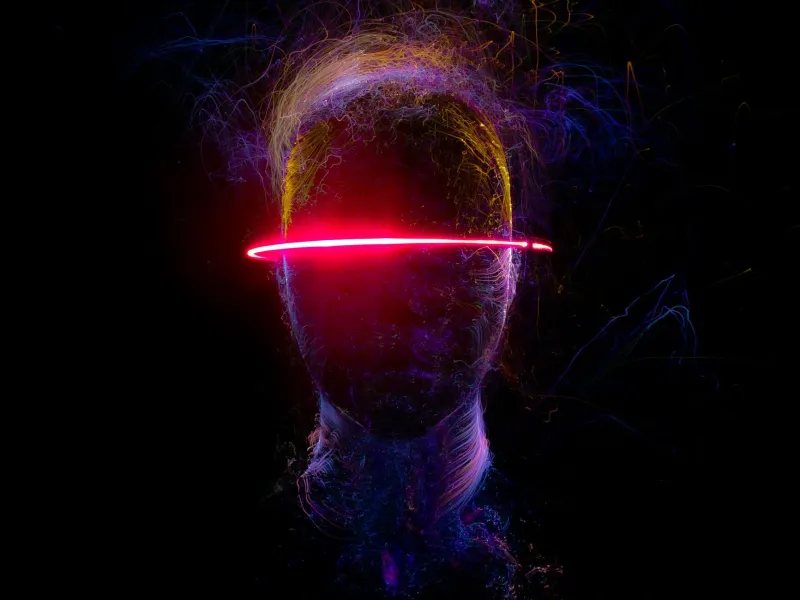
There is a specific kind of wrongness your brain registers before your eyes can even articulate it. A face that is almost right. A smile that lands a half-second too late. Eyes that hold steady when human eyes would flinch. You lean forward on the couch, squint a little, and think: something is off. Welcome to the AI deepfake era of cinema, and congratulations — your nervous system just clocked something your brain hasn't finished processing yet.
Hollywood has always been in the business of illusion. But the newest trick up the industry's sleeve isn't a camera angle or a prosthetic. It's a machine that has studied every frame of an actor's career, catalogued their microexpressions, and can now reproduce their face on demand — no trailer, no per-diem, no onset tantrum required. Whether that sounds like progress or a slow-motion disaster depends heavily on who you ask.
The Technology Is Here. The Comfort Level Is Not.
The term "uncanny valley" was coined in 1970 by Japanese robotics professor Masahiro Mori, who observed that humanoid robots become deeply unsettling the closer they get to looking genuinely human — right up until they actually do. The same principle applies, with terrifying precision, to AI-generated actor likenesses in film.
We've already seen early experiments. Rogue One: A Star Wars Story digitally resurrected Peter Cushing, who had been dead for over two decades, to reprise his role as Grand Moff Tarkin. Audiences were simultaneously impressed and creeped out. The effect was good enough to be shocking. It was not good enough to be comfortable. More recently, Indiana Jones and the Dial of Destiny used de-aging technology to render a younger Harrison Ford in its opening sequence — a technical marvel that many viewers described as "almost" convincing, which is another way of saying not quite convincing at all.
And "not quite" is exactly where the uncanny valley lives. That gap between almost-real and actually-real is where audience trust goes to die.
The Ethics Are Messier Than the Technology
Here's where it stops being just a visual effects conversation and starts being a labor rights conversation. When a studio can generate a photorealistic version of a working actor — using footage that actor filmed years or decades ago — what exactly does that actor owe them? What do they owe that actor?
The 2023 SAG-AFTRA strike put this question front and center. One of the core fears driving actors to the picket line was the prospect of studios scanning their likeness once, paying them for a single day's work, and then deploying that digital double indefinitely across projects, sequels, and promotional materials. No residuals. No creative input. No say whatsoever.
Smaller actors — the day players, the background performers, the character actors who built careers on physical presence — face the starkest threat. A-listers have leverage to negotiate likeness protections into their contracts. The working actor trying to pay rent in Burbank does not. The technology doesn't discriminate between the famous face and the not-yet-famous one. It just needs data.
When Studios Experiment and Audiences Become the Lab Rats
What makes this particularly complicated is that studios aren't waiting for cultural consensus to catch up with capability. They're already using the technology, often without prominent disclosure. AI-assisted de-aging is now a standard tool in the blockbuster toolkit. Posthumous digital appearances — like James Dean being cast (yes, cast) in a 2019 Vietnam War film years after his death — have generated enough backlash to suggest audiences have opinions about this, even if they can't always articulate them cleanly.
Streaming platforms are arguably more aggressive experimenters than traditional studios, precisely because their content volume is so enormous and their accountability to any single project is so diffuse. When you're producing hundreds of hours of content a year, the incentive to find cost efficiencies is overwhelming. AI-generated likenesses are a cost efficiency. The ethical math is someone else's problem, apparently.
Your Brain Knows Before You Do
The uncanny valley response isn't a quirk or an affectation. It's your perceptual system doing exactly what it evolved to do — detecting anomalies in human faces because, historically, an almost-human face was a threat. The fact that this same alarm system now fires at a CGI recreation of a beloved movie star is genuinely new territory for human neurology.
What's interesting is that the response varies wildly based on context and expectation. If you're told upfront that you're watching a digital recreation, your brain adjusts. If you're not told — if the recreation is seamlessly integrated without disclosure — the unease operates below the level of conscious thought. You feel it without knowing why. You disengage from the film slightly. The spell breaks.
Filmmakers have spent a century learning how to cast that spell. AI threatens to uncast it in ways that are hard to predict and harder to reverse.
So Where Does This Leave the Movies?
The optimistic read is that technology always finds its equilibrium. CGI once looked laughably fake; now it's invisible when used well. Perhaps AI-generated likenesses will eventually cross the valley entirely and land on the other side, where they're indistinguishable from the real thing and audiences stop noticing.
The pessimistic read is that "indistinguishable from the real thing" is exactly the problem, not the solution. Cinema's emotional power has always rested on the knowledge that a real human being was in front of that camera, making choices, taking risks, being present. The moment that's no longer necessarily true, something fundamental about the contract between film and audience shifts.
Nobody has figured out the right answer yet. The studios are experimenting. The actors are negotiating. The regulators are, characteristically, about fifteen steps behind. And audiences are sitting on their couches, leaning forward, squinting at something they can't quite name.
That slight wrongness you're feeling? Pay attention to it. It's trying to tell you something important.