Infinite TV, Zero Satisfaction: The Streaming Burnout Nobody Warned You Was Coming
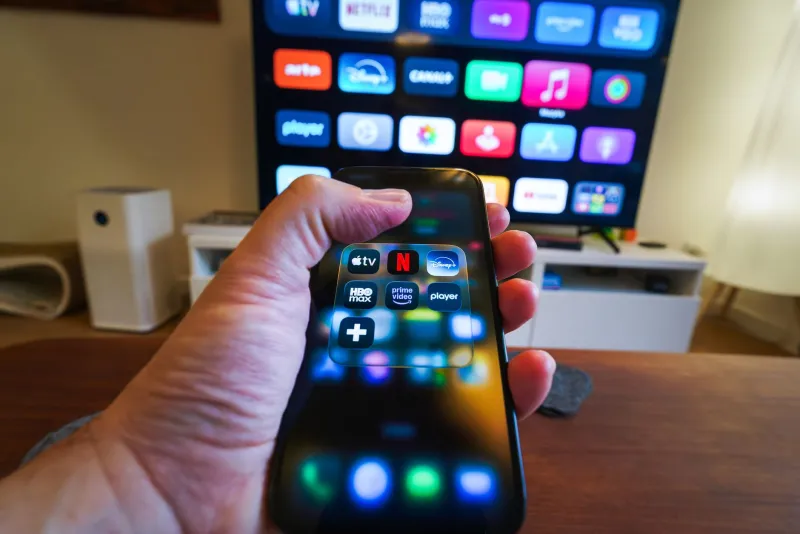
Somewhere in your home right now, there is a watchlist. Maybe it lives in a streaming app. Maybe it's a Notes app graveyard of titles you typed in during a trailer you saw six months ago and immediately forgot. Maybe it's just a vague, shapeless guilt that follows you around every time you open Netflix and spend twenty-three minutes scrolling before giving up and rewatching The Office for the eleventh time.
You have access to more filmed entertainment than any human being who has ever lived. You are exhausted by it. Both of these things are true simultaneously, and the second one is almost entirely caused by the first one.
This is the streaming burnout nobody put in the brochure.
The Paradox of Too Many Choices (It's Actually a Real Thing)
In 2000, psychologist Barry Schwartz began developing what he'd eventually call the Paradox of Choice — the counterintuitive finding that more options don't produce more satisfaction. They produce more anxiety, more second-guessing, and ultimately more paralysis. His research, later expanded into a book and a TED Talk that your college professor definitely made you watch, showed that people given thirty flavors of jam were significantly less likely to buy any jam at all compared to people given six flavors. They were also less satisfied with whatever jam they did choose, because the mental weight of all the unchosen jams lingered.
Now replace jam with streaming content. Netflix alone has somewhere north of 5,000 titles available in the US at any given moment. That's not counting Hulu, Max, Apple TV+, Peacock, Paramount+, Disney+, and whatever other subscription is quietly billing your credit card. The total volume of available content across major platforms runs into the tens of thousands of hours. Your brain, which evolved to make decisions in environments of scarcity rather than abundance, is handling this about as well as you'd expect.
The result is decision fatigue before you've watched a single frame. You're tired before the opening credits roll.
The Watchlist Is Not Your Friend
Here's something nobody tells you about the watchlist: it is an anxiety machine disguised as an organizational tool. Adding a title to your watchlist feels productive. It feels like you've done something. You have not done something. You have created a small additional obligation and filed it under "leisure."
Watchlists grow faster than any human being can consume content. They become records of intention rather than plans of action. And every time you open a streaming app and see that list — forty, sixty, a hundred titles long — you experience a tiny but real sense of failure. You haven't watched those things. You meant to watch those things. What kind of person are you, exactly, that you can't even watch television correctly?
This is insane. We all know this is insane. We keep doing it anyway.
The watchlist is also, crucially, a time-stamped document of a version of yourself that no longer exists. The you who added that Danish political thriller in 2021 was apparently a different person with different bandwidth and different life circumstances. Current you looks at that Danish political thriller and feels nothing but a faint, inexplicable guilt.
The Binge Hangover Is Real and It's Not Your Fault
You've probably experienced this: you spend a weekend binge-watching a series, finish it Sunday night, and feel not triumphant but oddly depleted. Like you ran a race you didn't train for. This is not a character flaw. It's a physiological and psychological response to what you just put your brain through.
Binge-watching is cognitively demanding in ways that don't feel demanding in the moment. You're tracking characters, plot threads, foreshadowing, dialogue, and emotional arcs across multiple hours of compressed narrative. Your brain is doing real work. The fact that you're horizontal on a couch while doing it doesn't change the cognitive load — it just removes the physical cues that would otherwise tell your body it's tired.
On top of that, streaming platforms are specifically engineered to prevent natural stopping points. The autoplay function, the "are you still watching" prompt that feels vaguely judgmental, the post-credits scene designed to hook you into the next episode — these are not neutral features. They are deliberate friction-reducers designed to keep you in the app. The binge isn't something you chose. It's something the interface nudged you toward, one frictionless transition at a time.
Notification Fatigue and the Tyranny of New
Streaming culture has also introduced a new variant of FOMO that deserves its own clinical category: the pressure to watch things now, while they're culturally relevant, before the discourse moves on and you're left holding a spoiler you didn't ask for.
Platforms reinforce this with aggressive push notifications. Something new dropped. Something you added to your watchlist is leaving. Something the algorithm has determined you'd like based on your viewing history is available now. Your phone buzzes. Your email pings. The message is always some variant of: there is more content, and you are not watching it.
The cumulative effect is a relationship with entertainment that feels less like leisure and more like a subscription-based obligation. You're not watching TV for fun. You're managing a content portfolio, and the portfolio is underperforming.
How to Actually Enjoy Watching Things Again
The good news is that the fix is simpler than the problem, even if it requires some genuine behavioral adjustment.
Pick something and commit before you sit down. Decide what you're watching before you open the app. Remove the decision from the couch environment entirely. This sounds almost offensively basic, but it eliminates the scroll-and-abandon cycle that generates most of the fatigue.
Nuke the watchlist, or at least triage it ruthlessly. If you haven't watched something in eighteen months, it's not on your watchlist — it's on your guilt list. Delete it without ceremony. You're not failing anything. You're just being honest.
Turn off autoplay. This single change returns agency to you in a way that feels genuinely different after a few days. A natural episode break is a natural stopping point. Use it.
Watch something without your phone in the same room. This is apparently a radical suggestion in 2024, but the data on divided attention is unambiguous: partial attention produces partial engagement, which produces partial satisfaction. The show isn't bad. You just haven't actually been watching it.
The streaming era promised unlimited entertainment, and it delivered. What it didn't mention was that unlimited entertainment, consumed without intention, produces something that feels a lot like the opposite of fun. Your brain didn't break. The system is just poorly designed for human enjoyment.
The movies — and shows, and documentaries, and limited series — are still great. You just have to let yourself actually watch them.