The Trailer Told You Nothing and Charged You Full Price Anyway
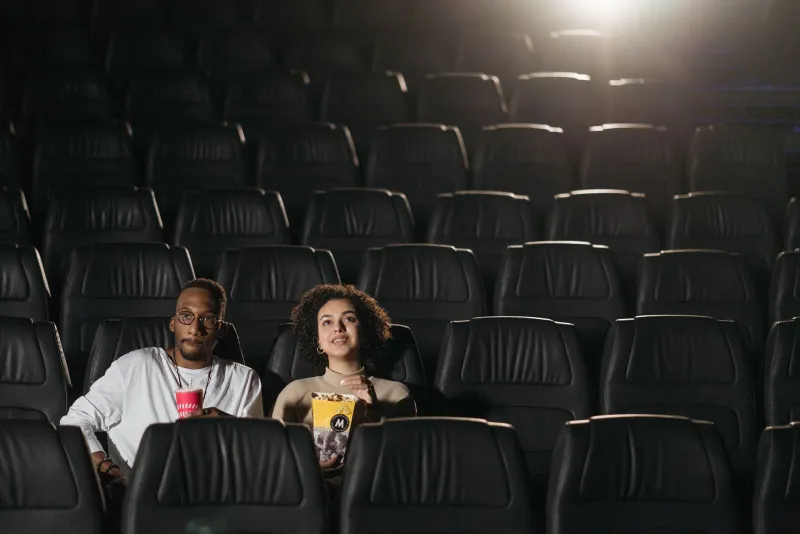
There's a specific kind of confusion that settles over you about twenty minutes into a movie you were genuinely excited to see. Not the good kind of confusion — not the Inception kind where you're pleasantly lost in a puzzle. The bad kind. The kind where you lean over to your friend and whisper, "Wait, what is this actually about?" and your friend just shrugs because they watched the same three trailers you did and they're equally lost.
Congratulations. You've been mystery-boxed.
The Art of Saying Absolutely Nothing
At some point in the last decade, Hollywood marketing decided that the biggest threat to a movie's opening weekend wasn't bad reviews or a crowded release calendar — it was the audience knowing too much. Fair enough. Nobody wants to feel like they've already seen the film before buying a ticket. Oversharing trailers have been a legitimate problem. Remember when the Batman v Superman trailer basically handed you the entire third act? That was a disaster.
But the overcorrection has been spectacular.
Studios are now releasing trailers so aggressively vague that they function less like advertisements and more like abstract mood boards. You get slow-motion walking. You get a cover of a pop song stripped down to a single sad piano. You get a brief flash of a face looking concerned, then hopeful, then concerned again. You get a title card that says something like "This December... everything changes." And then you get absolutely nothing else.
Everything changes. Cool. What is everything? Who are these people? What do they want? Are we in space? Is this a sequel? Is the dog okay?
When Mystery Marketing Becomes a Liability
The theory behind withholding information is sound: leave audiences curious enough to show up. The problem is that curiosity and confusion are not the same emotion, and studios have been treating them like synonyms.
Curiosity draws you toward something. Confusion pushes you away from it. When a trailer for a $150 million film gives you three character names, a vague threat, and a lingering shot of someone staring at the horizon, you don't walk away desperate to buy a ticket. You walk away unsure whether you're the target audience. You scroll past it. You forget about it by Tuesday.
Then the movie opens, earns $40 million on a holiday weekend when it should have earned $90 million, and the studio spends two weeks blaming "the audience" for not showing up to support original content. Meanwhile, the marketing team that produced four trailers containing a combined total of zero useful plot information is already pitching the same strategy for the next release.
The Specific Crime of the Misdirection Trailer
There's a variation of this problem that's actually worse than pure vagueness: the misdirection trailer. This is when a studio does show you footage, but the footage is carefully selected to make the movie look like something it fundamentally isn't.
You've experienced this. You went in expecting a fast, funny heist comedy based on the trailer, and you got a slow, melancholy character study about grief. Which might have been a great movie — but you weren't prepared for it, and unprepared audiences are unforgiving audiences. They feel tricked. They tell their friends they were tricked. Word-of-mouth, the most powerful marketing tool in the industry, curdles overnight.
The misdirection trailer usually happens when a studio gets cold feet about a film's tone. They have a quiet, challenging movie and they're afraid quiet, challenging movies don't sell. So they find the three most energetic minutes in the whole film and build the trailer around those. The movie is technically represented in the trailer. It just isn't honestly represented. And audiences notice the gap the second they sit down.
What a Good Trailer Actually Does
Here's the thing nobody in a marketing meeting seems to want to say out loud: the best trailers in recent memory were not vague. They were precise.
The first Mad Max: Fury Road trailer showed you exactly what kind of movie you were getting — loud, relentless, chrome-sprayed insanity on wheels. It didn't hide the tone. It weaponized it. The Get Out trailer gave you enough of the premise to make you deeply unsettled without spoiling the film's central reveal. The Everything Everywhere All at Once trailer was genuinely weird and completely honest about how weird the film was going to be.
All three of those movies built massive word-of-mouth because audiences who showed up knew what they were walking into and got exactly what was promised, delivered at a higher level than they expected. That's the formula. It's not complicated.
The Audience Is Not the Problem Here
Every time a mystery-marketed film underperforms, there's a familiar narrative that bubbles up: audiences don't support original ideas anymore. They only want sequels and franchises. They've been conditioned to consume the familiar and reject the new.
There's a grain of truth in that, sure. But it's also a remarkably convenient story for the people who spent $30 million on a marketing campaign that failed to explain what the movie was about.
American audiences go to theaters specifically to see things they haven't seen before — when they understand what they're being invited to experience. They'll take a chance on something strange and ambitious if someone makes a compelling case for it. What they won't do is pay $18 for a ticket to a vibe.
So here's a thought, free of charge: tell us what the movie is about. Not all of it. Just enough. We're adults. We can handle a premise. We've been handling premises since the invention of storytelling, and we've gotten pretty good at it.
The mystery isn't in the trailer. It's supposed to be in the movie. Get that part right, and we'll show up.